What Happens If I Pay $100 Extra on My Mortgage? (Plus $200 and $500)
$100 extra a month can cut about four years and $69,000 of interest off a $300,000 loan at 7%. Here is the full table for $50 to $500.
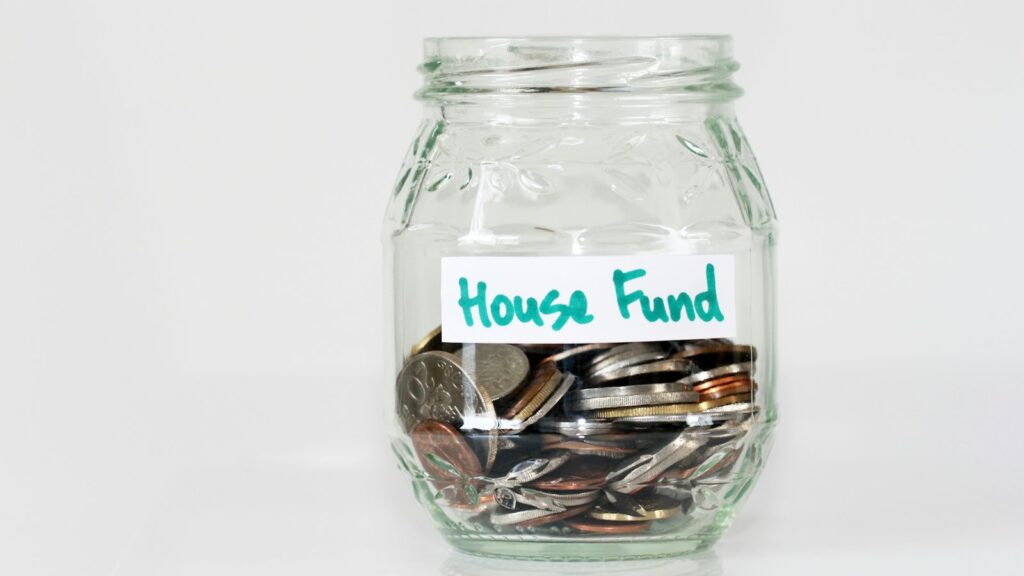
- $100 extra a month on a $300,000, 30-year loan at 7% cuts about 4 years and 2 months off the loan and saves about $69,000 in interest.
- $200 extra saves about 7 years and $117,000. $500 extra saves more than 12 years and about $200,000.
- The higher your rate, the more each extra dollar saves.
- Make sure your lender applies the money to principal, or it may just sit there as an early payment.
Adding a little to your mortgage each month sounds too small to matter. It isn’t. Every extra dollar goes straight to the loan balance, which means less interest next month, and the month after that, for the rest of the loan. Here’s what $50, $100, $200 and $500 a month really do, with the math done for you.
How much $100 extra a month saves
These examples use a 30-year fixed loan at 7%, with the extra payment starting from the first month. Your exact results will depend on your balance, rate and how many years you have left.
| Extra each month | $300,000 loan: time saved | Interest saved | $400,000 loan: time saved | Interest saved |
|---|---|---|---|---|
| $50 | 2 yrs 3 mos | $38,401 | 1 yr 9 mos | $39,481 |
| $100 | 4 yrs 2 mos | $69,338 | 3 yrs 3 mos | $72,858 |
| $200 | 7 yrs 1 mo | $116,640 | 5 yrs 9 mos | $126,617 |
| $500 | 12 yrs 8 mos | $200,235 | 10 yrs 9 mos | $229,826 |
For context, the normal payment is $1,996 a month on the $300,000 loan and $2,661 on the $400,000 loan (principal and interest only). Over 30 years, the $300,000 loan costs about $418,500 in interest if you never pay extra. Plug in your own loan with our extra payment calculator.
Why a small amount makes such a big difference
Each month, your interest is figured on whatever you still owe. Early in a 30-year loan, most of your payment goes to interest, not principal. You can see this in our amortization calculator: at 7%, only about $250 of the first $1,996 payment on a $300,000 loan goes toward the balance.
So an extra $100 in month one is like a 40% boost to the principal you paid off that month. That $100 never earns interest for the lender again, and the effect stacks up month after month.
Does your interest rate change the result?
Yes. The higher the rate, the more interest each extra dollar avoids. Here’s $100 extra a month on a $300,000, 30-year loan at different rates:
| Rate | Time saved | Interest saved |
|---|---|---|
| 6% | 3 yrs 11 mos | $53,346 |
| 7% | 4 yrs 2 mos | $69,338 |
| 8% | 4 yrs 6 mos | $88,301 |
With 30-year rates averaging above 7% in late 2026, extra payments are working harder than they did a few years ago. See where rates may head next on our mortgage rate forecast page.
How to make an extra payment the right way
- Check for a prepayment penalty. Most home loans today don’t have one, but read your note to be sure. Our guide to mortgage prepayment penalties explains the rules.
- Mark it as “principal only.” Use your servicer’s online “additional principal” box, or write it on the check. Otherwise, the money may be held as an early payment instead of lowering the balance. Our guide to paying off your mortgage early shows how.
- Automate it. Setting the extra amount to go out with every payment means you won’t forget, and you won’t miss it.
- Check your statement. The next month, the principal line should show your extra amount.
When to put your extra $100 somewhere else first
- You carry credit card debt. Card rates are usually much higher than mortgage rates.
- You don’t have an emergency fund yet. Money in your house is hard to get back out.
- You aren’t getting your full employer 401(k) match. That match is free money.
If those are covered, extra mortgage payments are a safe, guaranteed way to save. Still deciding? Read pay off your mortgage early or invest? Prefer one bigger payment a year? See what one extra mortgage payment a year saves.
FAQ
What happens if I pay $100 extra on my mortgage?
Your balance drops faster, so you pay less interest and finish early. On a $300,000, 30-year loan at 7%, $100 a month saves about $69,000 in interest and about four years.
Is it better to pay extra monthly or once a year?
Monthly saves slightly more because the balance drops sooner, but the difference is small. See lump sum vs. monthly extra payments.
Can I stop paying extra whenever I want?
Yes. Extra payments are almost always optional, so you can pause them if money gets tight. Your regular payment stays the same.
Does paying extra help if I plan to sell in a few years?
Yes. You still save interest and you’ll walk away with more equity when you sell. You just won’t see the “years saved” part.
Sources: Consumer Financial Protection Bureau (prepayment and payment-crediting rules); Freddie Mac Primary Mortgage Market Survey. All payment, interest and time-saved figures computed by Keys & Coffee using standard amortization math. This article is general education, not financial advice. Keys & Coffee is not a lender.

Written by
Shivam Kaushik· IMSHIVA
Founder & Director, QuibbleTech Solutions Pvt Ltd · Editor, Keys & Coffee
Shivam Kaushik is the founder of QuibbleTech Solutions Pvt Ltd and the editor of Keys & Coffee. He is not a licensed loan officer or financial adviser. Every guide here is written in plain English and checked against official sources such as the CFPB, HUD, Fannie Mae, Freddie Mac and the Federal Reserve. For advice on your own loan, talk to a licensed lender.
Keys & Coffee is an independent education site. We are not a lender or mortgage broker, we do not take loan applications or payments, and nothing here is financial advice. This site is not affiliated with Axia Home Loans, Axia Financial, LLC, or Planet Home Lending. Rates and rules change often — always confirm details with a licensed loan officer and check any lender on the NMLS Consumer Access site.
Keep reading

Pay Off Your Mortgage Early or Invest? A Plain-English Side-by-Side
Paying extra on a 7% mortgage is like a guaranteed 7% return. Here is how it stacks up against investing, and a…
Lump Sum vs. Monthly Extra Mortgage Payments: Which Saves More?
We ran $12,000 of extra payments five different ways on a $300,000 loan. Here is which saves the most, and when each…
One Extra Mortgage Payment a Year: How Much Time and Interest It Saves
One extra payment a year can take about six years and $98,500 of interest off a $300,000 loan at 7%. Here are…