New UAD 3.6 Appraisal Report Is Now Required on Conventional Loans: What Buyers and Refinancers Should Know
As of November 2, 2026, appraisals on conventional loans must use the redesigned UAD 3.6 report. Here is what changes, what does not, and how to protect your timeline and rate lock.
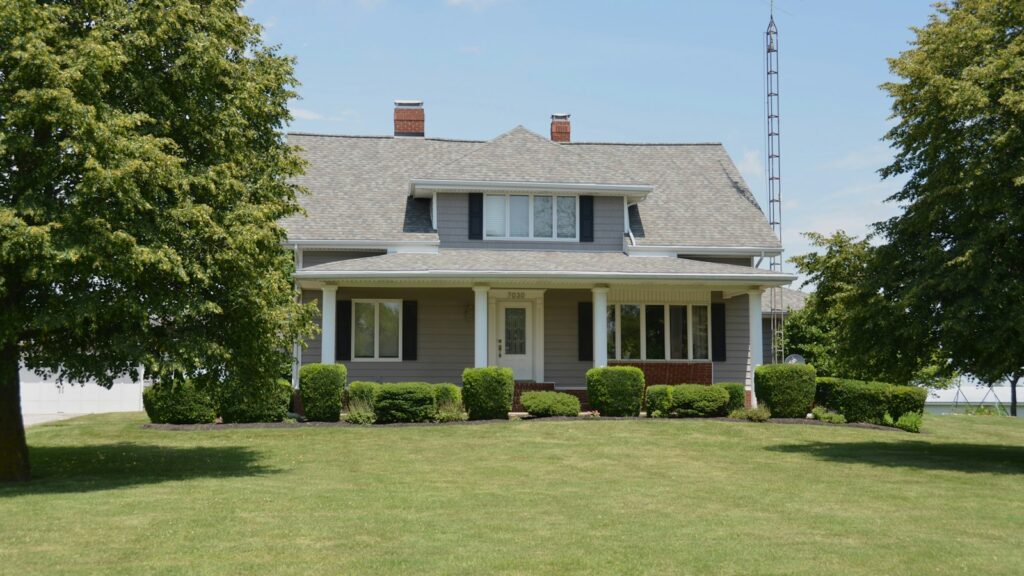
- From today, Monday, November 2, 2026, appraisals on loans sold to Fannie Mae or Freddie Mac must use the new UAD 3.6 format and redesigned Uniform Residential Appraisal Report. Old forms like the 1004 are being retired.
- Your home is valued the same way. What changes is the report: one data-driven document with clearer condition and quality ratings and more detail.
- Some lenders hold a one-time GSE exception to keep the old format into 2027, so reports may look old- or new-style depending on your lender.
- Transition hiccups can add days. Watch your rate-lock date. FHA: new format optional for now.
Buying or refinancing with a conventional loan this fall? Your appraisal just got a makeover. Not the house, the paperwork. Fannie Mae and Freddie Mac (the GSEs behind most US conventional mortgages) now require a new data format, UAD 3.6, on a redesigned report.
What changed on November 2
Per the joint Fannie Mae and Freddie Mac notice, all new appraisal submissions to the Uniform Collateral Data Portal (UCDP, the system lenders use to send appraisals to the GSEs) must use UAD 3.6 from November 2, 2026. New submissions in the old UAD 2.6 format now receive a “Fatal” message and a “Not Successful” status; only revisions to reports already submitted in the old format still go through.
There is a safety valve. On September 30 the GSEs announced a one-time temporary policy exception for approved lenders that could not finish in time, requested from each GSE separately:
- Nov 2, 2026 to Feb 28, 2027: lenders with an exception can keep submitting old-format reports with normal processing.
- Mar 1 to May 19, 2027: “reduced functionality.” Old-format reports are accepted, but the GSEs’ automated tools return a placeholder score and those loans lose the usual value-related rep-and-warrant relief.
- May 20, 2027: UAD 3.6 mandatory for everyone. Old-format resubmissions run through June 27, 2027; then UAD 2.6 is retired for GSE work.
So two borrowers in the same town could get two different-looking reports this winter, and both are legitimate.
Old report vs. new report
| Feature | Old (UAD 2.6 forms) | New (UAD 3.6 redesigned URAR) |
|---|---|---|
| Structure | Fixed forms by property type: 1004/70 (single-family), 1073/465 (condo), 2055 (exterior-only), 1025/72 (2-4 units), 1004D/442 (completion) | One dynamic report for all property types; the data decides which sections appear |
| Inspection types | Separate forms for interior, exterior-only, desktop | One report covers traditional, hybrid, desktop, exterior-only |
| Condition & quality | One overall C1-C6 and Q1-Q6 rating | Same scales, clearer definitions, plus interior/exterior ratings and component-level update status |
| Explanations | Long “General Addendum” at the back | Commentary fields inside each section |
| Accessory dwelling units | Minimal | Size, condition, rooms and location documented |
| Who requires it | Everyone, until this week | Fannie/Freddie for new submissions; optional for FHA since Oct 1, 2026 |
What does NOT change: how your home is valued
The appraiser still inspects the property, finds recent sales of similar homes nearby, adjusts for differences, and lands on an opinion of value as of a specific date. Freddie Mac’s FAQ says the purpose of the report has not changed, and the C1-C6 and Q1-Q6 scales are the same, just explained more clearly. Nothing in UAD 3.6 tells an appraiser to value your house higher or lower. For what happens next, see our underwriting explainer.
What to expect at the appointment
- More photos, more questions. Expect photos of every room and the mechanicals, and questions about when the roof, HVAC, kitchen and baths were updated.
- ANSI measurements. Square footage may differ slightly from the listing.
- ADUs documented in detail, including a basement apartment or garage conversion.
Reminder: an appraisal is not a home inspection. The appraiser estimates value for the lender; they do not test the furnace. Our home inspection guide covers the difference.
Transition hiccups and your rate lock
Software vendors, appraisal management companies and lenders are all switching at once, so some friction is likely. Realistic risks: a report bounces from the portal for a formatting error, a lender and appraiser disagree on format (formats cannot be mixed on one file), or appraisers still learning the report take longer. Each can add days, and days matter on a 30- or 45-day lock. Our rate-lock explainer covers the mechanics; the checklist:
- Ask your lender on day one: “Are you submitting in UAD 3.6, or do you have the GSE exception?”
- Ask whether the appraisal can be ordered earlier than usual.
- Know your lock expiration and extension cost before you need it.
Refinancing? A few extra days rarely cost anything; compare a short delay against your monthly savings in the refinance calculator.
What the appraisal costs
Fees are set by the appraiser or appraisal management company, not Fannie or Freddie, and vary by state and property. A standard single-family appraisal commonly runs several hundred dollars; large, unusual or rural homes cost more. The estimate appears on your Loan Estimate; budget for it in the closing cost calculator.
If the appraisal comes in low
Lenders base the loan on the lower of purchase price or appraised value, so a gap comes out of your pocket unless you renegotiate.
You agree to pay $400,000 with 10% down ($40,000), planning a $360,000 loan at 7.1% on a 30-year fixed. The appraisal comes in at $385,000, a $15,000 gap.
Option A, pay the gap: the lender lends 90% of $385,000 = $346,500. You need $400,000 minus $346,500 = $53,500 at closing, $13,500 more than planned. Payment on $346,500 at 7.1% is about $2,329 a month (principal and interest), versus $2,419 on the original $360,000 loan.
Option B, renegotiate to $385,000: you put down $38,500, borrow $346,500, pay the same roughly $2,329, and skip the $13,500 gap. Sellers in slow markets often agree. With an appraisal contingency, walking away is Option C.
Math: monthly P&I = P x r / (1 – (1 + r)^-360), r = 7.1 / 1200. Run your own numbers in the mortgage calculator.
What it means for you
- Buyers: Valuation is business as usual; the risk is timing. Keep an appraisal contingency if your market allows.
- Refinancers: Expect a more detailed walkthrough; have update dates ready.
- FHA borrowers: Nothing required yet. FHA opened an optional UAD 3.6 period on October 1 and has not set a mandatory date.
What to watch next
- Thu, Nov 5: Freddie Mac weekly rate survey (PMMS).
- Fri, Nov 6, 8:30am ET: BLS October jobs report. Tue, Nov 10: October CPI.
- Late November: FHFA 2027 conforming loan limits.
- Wed, Dec 9: Fed decision; see our 2027 rate forecast.
- Mar 1, 2027: reduced functionality for lenders still on the old format. May 20, 2027: UAD 3.6 mandatory for all.
FAQ
Do I have to do anything differently because of UAD 3.6?
No. Your lender orders the appraisal and the appraiser handles the format. Provide access, have update dates ready, and watch your rate-lock timeline.
My appraisal was done in October in the old format. Is it still good?
Yes. The mandate is based on when the report is first submitted to the GSE portal, and revisions to reports already submitted in the old format are still accepted.
Can I still ask for a Reconsideration of Value?
Yes, through your lender, if the appraiser missed a comparable sale or got a fact wrong.
Sources: Fannie Mae, UCDP Submission Summary Report Messaging Updates Supporting the Transition to UAD 3.6; Fannie Mae, Temporary Policy Exception notice (Sept 30, 2026); Fannie Mae, Broad Production for UAD 3.6 (Jan 26, 2026); Freddie Mac, Uniform Appraisal Dataset and UAD and Forms Redesign FAQs; FHFA, Uniform Appraisal Dataset; HUD, FHA INFO 2026-23 (Oct 1, 2026). This article is general education, not financial advice. Keys & Coffee is not a lender.
Keys & Coffee is an independent education site. We are not a lender or mortgage broker, we do not take loan applications or payments, and nothing here is financial advice. This site is not affiliated with Axia Home Loans, Axia Financial, LLC, or Planet Home Lending. Rates and rules change often — always confirm details with a licensed loan officer and check any lender on the NMLS Consumer Access site.
Keep reading

Homeowners Insurance Explained: What It Covers (and What It Doesn’t)
Homeowners insurance is the umbrella you hope you never open. Here is what it covers, what it skips (looking at you, floods)…

Earnest Money Explained: How Much, Who Holds It and How to Get It Back
Earnest money is your "I'm serious" deposit when a seller says yes. Here is how much is typical, who holds it and…

Home Inspection Explained: What Inspectors Check (and What to Do Next)
Listing photos can hide a leaky roof and a grumpy furnace. Here is what a home inspection checks, what it costs extra…