USDA Loans Explained: Zero Down Payment Home Loans for Rural (and Not-So-Rural) Buyers
No down payment, a fixed rate and a government guarantee. USDA loans are one of the best-kept secrets in home buying, and "rural" may include more places than you think.
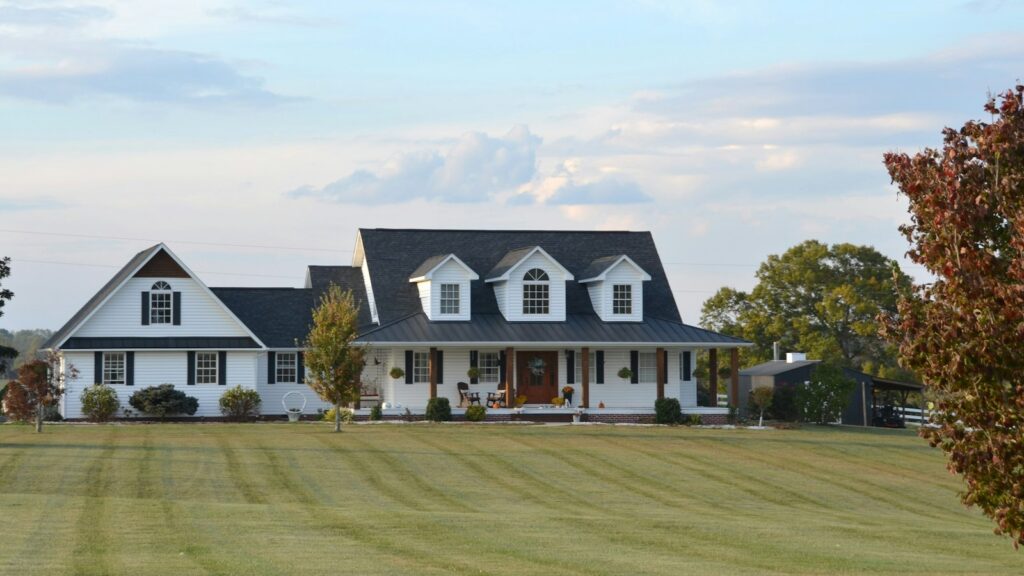
- Down payment: none required. The USDA Guaranteed Loan Program allows up to 100% financing of the appraised value, plus the upfront fee.
- Where: the home must be in a USDA-eligible rural area, which includes many small towns and some edges of suburbs.
- Who: household income must be at or below 115% of the area median, and the home must be your primary residence.
- Fees: for fiscal year 2027 (Oct. 1, 2026 to Sept. 30, 2027), USDA’s upfront guarantee fee is 1.00% and the annual fee is 0.35% of the balance.
- Loan shape: 30-year fixed rate.
Say “USDA” and most people think of beef grading stickers, not mortgages. But the U.S. Department of Agriculture also runs one of the few home loan programs in the country that lets you buy with zero down payment.
If you are open to living outside a big city, it is worth five minutes of your time. Grab your coffee and let’s dig in.
What is a USDA loan?
A USDA loan is a mortgage backed by USDA Rural Development. The goal is to help low- and moderate-income households buy homes in rural areas. There are two main flavors:
- Guaranteed loans (Section 502 Guaranteed). You borrow from an approved private lender, and USDA guarantees a portion of the loan. This is what most people mean by “USDA loan.”
- Direct loans (Section 502 Direct). USDA lends to you directly. These are aimed at low- and very-low-income applicants and can include payment help.
This guide focuses on the guaranteed program, since that is the one you will run into at most lenders.
USDA loan requirements at a glance
| Requirement | USDA Guaranteed Loan |
|---|---|
| Down payment | None required |
| Location | Must be in a USDA-eligible rural area |
| Income limit | Household income up to 115% of the area median |
| Occupancy | Primary residence; you must move in within 60 days of closing |
| Credit score | No program minimum; lenders may set their own |
| Debt ratios | Guideline of 29% for housing costs and 41% for total debts, with flexibility for compensating factors |
| Loan term | 30-year fixed rate |
| Upfront fee (FY2027) | 1.00% of the loan |
| Annual fee (FY2027) | 0.35% of the unpaid balance |
| Seller contributions | Up to 6% of the sales price |
“Rural” is bigger than you think
USDA has its own definition of rural, and it is generous. Plenty of small towns and some areas just outside metro regions qualify. The official eligibility map on the USDA website lets you type in an address and get a yes or no in seconds.
Pro tip: check the exact address, not just the town. Eligibility lines can cut right through a neighborhood, and maps are updated from time to time.
The income limit: a household thing
USDA looks at the income of all adults in the household, not just the people on the loan. The cap is 115% of the median household income for the county, and the exact limit depends on where you live and how many people live with you.
That last part trips people up. If your adult cousin lives with you and works, their income may count toward the household limit even if they are not on the mortgage. USDA allows certain deductions, such as for dependents and some childcare costs, so talk to a lender about how your household is counted.
What USDA loans cost
USDA does not use private mortgage insurance. Instead, it charges two guarantee fees. For fiscal year 2027, which started Oct. 1, 2026, USDA set them at:
- Upfront guarantee fee: 1.00% of the loan amount. Most buyers roll it into the loan.
- Annual fee: 0.35% of the unpaid balance, split into monthly payments.
For comparison, FHA loans charge an upfront mortgage insurance premium of 1.75% plus an annual premium. Our FHA loan requirements guide has the details, and our guide to PMI explains how conventional mortgage insurance works.
You buy a $250,000 home with zero down. Adding the 1% upfront fee ($2,500) brings the loan to $252,500.
- At a hypothetical 6.25% rate for 30 years, principal and interest come to about $1,555 a month.
- The 0.35% annual fee adds roughly $74 a month in the first year ($252,500 x 0.35% / 12), and it shrinks as your balance falls.
Property taxes and homeowners insurance are extra. The rate is illustrative only.
You can test your own numbers with our mortgage calculator. Not sure what price range fits? Try the home affordability calculator.
Credit: no official minimum, but it still matters
USDA’s guaranteed program does not set a minimum credit score. Lenders, however, often have their own minimums. USDA’s automated system, called GUS, also decides how much paperwork you need. An “Accept” result means a streamlined file. A “Refer” result means more documentation and a manual review.
No credit score at all? USDA allows nontraditional credit, such as a history of on-time rent and utility payments, in some cases.
What can a USDA loan pay for?
Besides the house itself, a USDA guaranteed loan can cover some reasonable closing costs, needed repairs (as long as price plus repairs does not exceed the appraised value) and certain energy-efficiency upgrades. Sellers can also chip in up to 6% of the price toward your costs.
That makes it possible to buy with very little cash, though you will still want savings for moving, furniture and the surprise you did not see coming. There is always one. For a sense of what closing usually costs, see our closing costs guide.
Pros and cons
| Pros | Cons |
|---|---|
| No down payment required | Location limits: must be an eligible area |
| Fees lower than FHA mortgage insurance | Household income cap |
| 30-year fixed rate | Primary residences only, no investment homes |
| Gift money allowed | Annual fee lasts for the life of the loan |
How to get started
- Check the property address on the USDA eligibility map.
- Check your county income limit for your household size on the same USDA site.
- Find a lender approved for USDA guaranteed loans and ask for a pre-approval. Our pre-approval vs pre-qualification guide explains what to expect.
- Shop homes in eligible areas, and confirm each address before you fall in love.
FAQ
Do I have to be a first-time buyer for a USDA loan?
No. The guaranteed program is not limited to first-time buyers, but the home must be your primary residence.
Can I use a USDA loan for a vacation home or rental?
No. USDA loans are for primary residences only. You must agree to move in within 60 days of closing.
Is there a USDA loan limit?
The guaranteed program does not have a set maximum loan amount. Your income limit and ability to repay effectively cap how much you can borrow.
Can I refinance into a USDA loan?
Only if your current loan is already a USDA loan. You cannot refinance a conventional or FHA loan into the USDA guaranteed program.
Do USDA fees ever change?
Yes. USDA can set the fees each fiscal year. The 1.00% upfront and 0.35% annual fees apply to fiscal year 2027.
Keys & Coffee is an independent education site and is not a lender. Examples are for illustration only. Sources: USDA Rural Development (Single Family Housing Guaranteed Loan Program fact sheet and FY2027 fee announcement), U.S. Department of Housing and Urban Development (FHA), FDIC Affordable Mortgage Lending Guide.
Keys & Coffee is an independent education site. We are not a lender or mortgage broker, we do not take loan applications or payments, and nothing here is financial advice. This site is not affiliated with Axia Home Loans, Axia Financial, LLC, or Planet Home Lending. Rates and rules change often — always confirm details with a licensed loan officer and check any lender on the NMLS Consumer Access site.
Keep reading

Assumable Mortgages Explained: How to Take Over a Seller’s Low Rate
Imagine moving into a house and inheriting the seller's old, low mortgage rate like a hand-me-down jacket that actually fits. That is…
VA Loan Requirements 2026: Eligibility, Credit, Funding Fee & Limits (Plain English)
Zero down, no monthly mortgage insurance, and often a better rate. If you served, the VA loan might be the best deal…
FHA Loan Requirements 2026: Credit Score, Down Payment & Loan Limits (Plain English)
Lower credit score? Small down payment? FHA loans were built for you. Here is exactly what you need in 2026 — no…