How Much House Can I Afford on a $90K Salary?
On a $90,000 salary, a comfortable home price is roughly $255,000–$305,000 at a 7.18% rate. Here is the 28/36 math, a stretch budget and what changes your number.
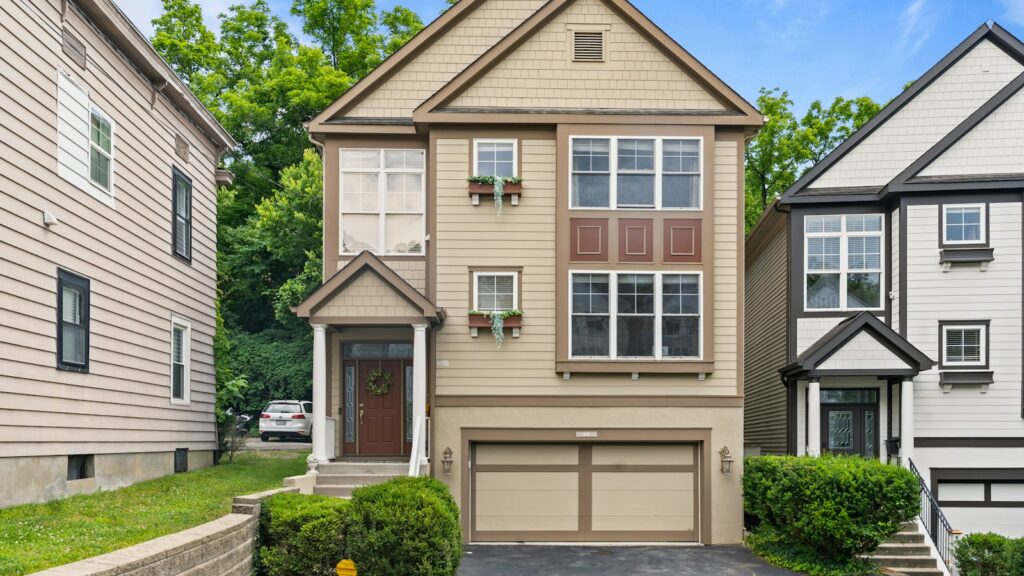
- On a $90,000 salary, a comfortable home price is roughly $255,000–$305,000, depending on your debts and down payment (at a 7.18% rate).
- A stretch budget could reach about $370,000–$390,000 if lenders approve you near a 43% debt-to-income ratio. Possible, but tight.
- Your gross monthly income is $7,500. The classic 28% rule puts your total house payment at about $2,100.
- Debts matter a lot: every $100/month of car or student loan payments cuts about $14,000–$15,000 from what you can borrow.
- Rates move the answer, so re-run the math when you’re ready to buy.
$90,000 a year is a solid income in most of the US. But “how much house” isn’t one number. It’s a range, from “sleep well at night” to “eat a lot of rice.” Let’s do the math in plain English.
Step 1: your monthly income
Lenders use gross income (before taxes): $90,000 ÷ 12 = $7,500 a month.
Step 2: the rules lenders use
| Rule | What it means | On $7,500/month |
|---|---|---|
| 28% front-end | Total house payment (principal, interest, taxes, insurance, PMI) ≤ 28% of gross income | $2,100 |
| 36% back-end | House payment + all other monthly debts ≤ 36% | $2,700 total |
| 43% back-end (stretch) | Common upper limit for many qualified loans; some programs go higher | $3,225 total |
Want to know where you stand right now? Our DTI calculator does it in a minute, and our DTI guide explains the limits.
Step 3: turn the payment into a home price
Assumptions for the table below: 30-year fixed at 7.18% (Freddie Mac’s weekly average the week of Nov 5, 2026), and about $450 a month for property taxes, homeowners insurance and PMI. Your local taxes could be much higher or lower.
| Scenario | Total house payment | Principal & interest | Max loan | Price with 5% down | Price with 10% down |
|---|---|---|---|---|---|
| Conservative (28%, no other debts) | $2,100 | $1,650 | ~$243,600 | ~$256,000 | ~$271,000 |
| Moderate (36%, $400 other debts) | $2,300 | $1,850 | ~$273,100 | ~$287,000 | ~$303,000 |
| Stretch (43%, $400 other debts) | $2,825 | $2,375 | ~$350,600 | ~$369,000 | ~$390,000 |
What changes your number the most
- Interest rate: at 7.18%, a $300,000 loan costs about $2,032 a month in principal and interest. Each 0.5% change moves that by roughly $100.
- Other debts: paying off a $400 car loan before you buy could add about $59,000 of borrowing power at today’s rates.
- Down payment: 20% down removes PMI on a conventional loan and lowers your payment. Our PMI guide explains how.
- Property taxes and insurance: these vary hugely by state and even by county. A high-tax area can shrink your budget by $40,000 or more.
- Loan type: FHA allows lower credit scores and small down payments but adds mortgage insurance. See our FHA requirements guide.
Don’t forget cash to close
Your down payment isn’t the only upfront cost. Closing costs often run a few percent of the loan amount. On a $300,000 home, plan for several thousand dollars on top of your down payment. Our closing cost calculator gives you an estimate, and our closing costs guide breaks down each fee.
How $90K compares
If you’re comparing salary levels, see our guides for $75K, $100K and $120K. The same rules apply; only the inputs change.
Your 4-step plan
- Write down your real monthly budget, including savings goals.
- Plug your numbers into our home affordability calculator using your local tax rate.
- Get pre-approved to see what lenders actually offer. Our pre-approval guide explains the difference from pre-qualification.
- Shop with a price cap below your approval, so you have room for repairs and surprises.
FAQ
Can I afford a $400,000 house on $90,000 a year?
It’s possible with few debts, a solid down payment and low property taxes, but at a 7.18% rate it would push you near or above a 43% debt-to-income ratio. For most people that’s a stretch, not a comfortable budget.
What’s my monthly take-home on $90,000?
It depends on your state, filing status, retirement contributions and benefits. Many people take home somewhere around $5,500–$6,000 a month. Lenders use gross income, but your own budget should use take-home pay.
How much should I save before buying on a $90K salary?
Plan for your down payment, closing costs of a few percent of the loan, and an emergency fund of several months of expenses. Lenders may also want to see reserves.
Does a 15-year loan change the answer?
Yes. Payments are much higher on a 15-year loan, so you’d qualify for a smaller loan, but you’d pay far less interest overall. See our 15 vs. 30-year guide.
Does my credit score change how much house I can afford?
Indirectly, yes. A higher score usually means a lower rate, and a lower rate means more home for the same payment.
Sources: Freddie Mac Primary Mortgage Market Survey (week of Nov 5, 2026); CFPB; Fannie Mae Selling Guide; HUD Handbook 4000.1. Payment examples are estimates computed with a standard amortization formula. This article is general education, not financial advice. Keys & Coffee is not a lender.

Written by
Shivam Kaushik· IMSHIVA
Founder & Director, QuibbleTech Solutions Pvt Ltd · Editor, Keys & Coffee
Shivam Kaushik is the founder of QuibbleTech Solutions Pvt Ltd and the editor of Keys & Coffee. He is not a licensed loan officer or financial adviser. Every guide here is written in plain English and checked against official sources such as the CFPB, HUD, Fannie Mae, Freddie Mac and the Federal Reserve. For advice on your own loan, talk to a licensed lender.
Keys & Coffee is an independent education site. We are not a lender or mortgage broker, we do not take loan applications or payments, and nothing here is financial advice. This site is not affiliated with Axia Home Loans, Axia Financial, LLC, or Planet Home Lending. Rates and rules change often — always confirm details with a licensed loan officer and check any lender on the NMLS Consumer Access site.
Keep reading

How to Compare Mortgage Lenders (and Save Thousands)
Getting just one extra mortgage quote saved borrowers about $1,500 on average, Freddie Mac found. Here's a step-by-step way to shop and…

How Much House Can I Afford on a $120K Salary?
On $120,000 a year, the classic 28/36 rule points to a home around $369,000 with 10% down at today's rates. Here's the…

Barbara Corcoran’s “Separate Entrance” Home-Buying Tip: We Ran the Numbers at Today’s 7% Rates
"Shark Tank" star Barbara Corcoran suggests buying a home with a separate entrance to rent out part of it. Here's what that…