Construction Spending Fell 1.9% in September as Home-Building Outlays Dropped 5.5%
The Census Bureau says US construction spending fell 1.9% in September to a $2,186.1 billion annual rate, with private residential down 5.5%. Here is what it means for buyers weighing builder incentives, owners planning renovations, and the rate outlook.
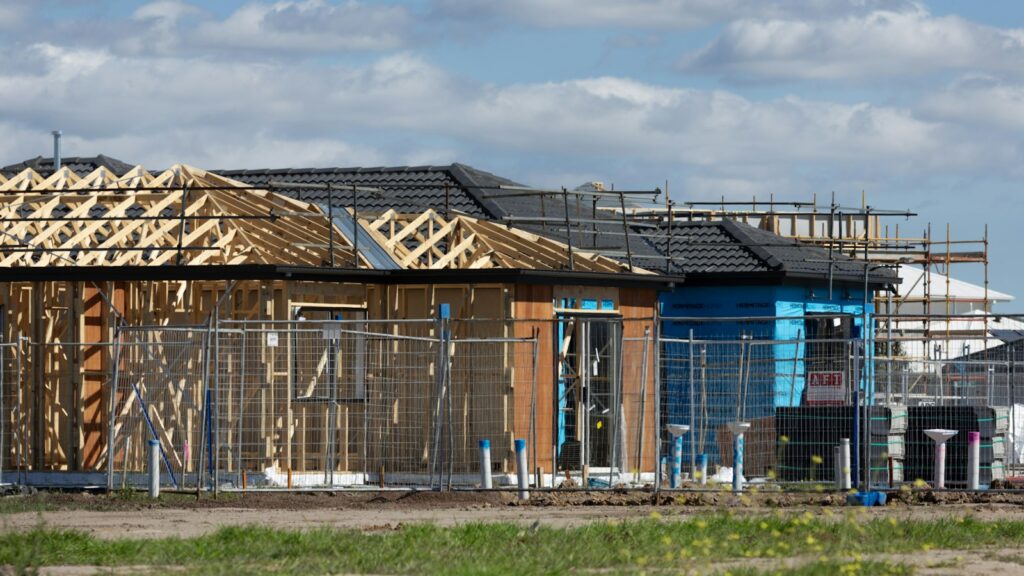
- Total US construction spending fell 1.9% in September to a $2,186.1 billion annual rate, the Census Bureau said Monday (Nov 2). That is 2.7% below September 2025.
- Private home-building spending dropped 5.5% in one month, to $848.8 billion from $898.0 billion. New single-family spending was flat; the hole appears to be in remodels and improvements.
- For buyers: builders are still sitting on about 8.4 months of new-home supply, so incentives (rate buydowns, price cuts) are likely to stick around.
- For owners: pricier materials and a mortgage rate near 7.24% make “should I renovate now?” a real math question. We run the numbers below.
Every month the Census Bureau adds up how much money is actually being poured into US construction — houses, offices, highways, the lot. The September 2026 report landed this morning with a thud: spending fell 1.9% from August when a small gain was expected, and home-building slid 5.5% in a single month. Pour a coffee; here is what it means for you.
The numbers, in one table
Figures are seasonally adjusted annual rates (“if this month’s pace lasted a whole year”), not adjusted for inflation.
| Category | September 2026 | August 2026 (revised) | Monthly change |
|---|---|---|---|
| Total construction | $2,186.1B | $2,227.4B | −1.9% |
| Private construction | $1,639.3B | $1,680.3B | −2.4% |
| Private residential | $848.8B | $898.0B | −5.5% |
| New single-family | — | — | 0.0% (−2.4% vs. Sept 2025) |
| New multifamily | — | — | +0.1% |
| Private nonresidential | $790.6B | $782.3B | +1.1% |
| Public construction | $546.8B | $547.1B | −0.1% |
| Total vs. a year ago | −2.7% | ||
| January–September vs. 2025 | −2.9% | ||
Two things jump out. First, August was revised up from +0.9% to +2.0%, so part of September’s drop is giving back a bigger-than-thought bounce. Second, new single-family (flat) and multifamily (+0.1%) barely moved, yet the residential total fell 5.5%. The third piece of residential is improvements — remodels, additions, new roofs. By simple subtraction, that is where the money went missing.
Why did home-building spending drop so hard?
The Census release reports the data without explaining it. The plain-English reading:
- Builders already slowed down. Our September housing starts write-up covered the pullback. Spending follows starts with a lag — the big cheques get written once framing goes up.
- Materials cost more. Reporting around today’s release pointed to high building-material prices as a likely drag on renovations. When the deck quote jumps, a lot of homeowners simply wait.
- Rates are high. Freddie Mac’s weekly survey put the 30-year fixed at 7.24% on October 29, down from 7.32% a week earlier but far above 6.17% a year ago. Fewer home sales means fewer “we just moved in, let’s redo the bathroom” projects, and pricier home-equity borrowing shrinks renovation budgets.
What it means for buyers: incentives are your friend
The Census/HUD new-home sales report (October 27) showed 676,000 new homes sold at an annual rate in September and 476,000 on the market — about 8.4 months of supply, well above the roughly six months that historically marks a balanced new-home market. Builders holding finished homes in a 7% mortgage world have one job: move inventory. Hence all the “ask about our rate” signs.
The two classic sweeteners are a price cut and a rate buydown (the builder pays to lower your rate, temporarily or for the life of the loan). Which is better? Let’s price it.
Option A — no incentive: $2,455.85 a month at 7.24%.
Option B — $20,000 price cut: loan drops to $340,360; payment $2,319.55. Saves $136.30 a month, every month, and you owe $20,000 less from day one.
Option C — builder pays for a permanent 1-point buydown to 6.24%: payment $2,216.46. Saves $239.39 a month, about $14,364 over five years — but only while you keep this loan.
Option D — 2-1 temporary buydown (5.24% year one, 6.24% year two, 7.24% after): $1,987.69 in year one, $2,216.46 in year two, then $2,455.85. Total savings about $8,491, all front-loaded.
Rule of thumb: staying five-plus years with the same loan? The permanent buydown usually wins on cash flow. Might refinance within a couple of years? Take the price cut — it lowers your balance for good. Run your own numbers in our buydown calculator and mortgage calculator, and read the builder’s Loan Estimate line by line: buydowns are sometimes paired with a higher base rate or a “use our lender” condition.
What it means for owners planning a renovation
If improvement spending is the soft spot, you are not alone in hitting pause. Two practical takeaways:
- Get fresh quotes. Material prices have moved, but so has contractor availability. A slower remodel market can mean shorter waits and more negotiable labour, even if lumber and fixtures are not cheaper.
- Mind the financing cost. A home-equity line at today’s rates is not the cheap money of 2021. Run a real payment with our HELOC calculator and check how it fits your debt-to-income ratio if you plan to borrow again soon.
What it means for the rate picture
Soft construction data is one more sign the rate-sensitive corners of the economy are cooling. One report will not move the Federal Reserve, which just held rates on October 28 and cares far more about jobs and inflation. But mortgage rates follow bond markets, and a run of weak housing prints tends to nudge long-term yields lower at the margin. See our 2027 mortgage-rate forecast for the longer view; if you are mid-deal, only a rate lock guarantees your number.
What to watch next
- Thu Nov 5: Freddie Mac weekly mortgage-rate survey (PMMS); Zillow October market report.
- Fri Nov 6, 8:30 a.m. ET: BLS October jobs report — the single biggest input for rate expectations.
- Tue Nov 10: October CPI (inflation).
- Late November: FHFA announces 2027 conforming loan limits.
- Wed Nov 25: Census/HUD October new-home sales.
- Tue Dec 1: Census October construction spending.
- Dec 9: FOMC rate decision.
FAQ
Does lower construction spending mean fewer new homes for sale?
Eventually, yes. Spending tracks work in progress, so a sustained drop means fewer homes finishing 6–12 months from now. Right now, though, builders still hold about 8.4 months of new-home supply, so near-term inventory is comfortable.
Is a builder rate buydown really free?
No. Builders fund buydowns from their margin and often prefer them to price cuts, because a cut shows up in neighbourhood comps and a buydown does not. Always compare the offer against an equivalent price cut, as above.
Should I wait for rates to fall before buying a new build?
No one can promise that. Inventory is high and incentives are generous now, and you can refinance later if rates drop. Run the affordability calculator and buy only what fits at today’s rate.
Sources: U.S. Census Bureau, Monthly Construction Spending, September 2026 (released Nov 2, 2026, census.gov/construction/c30); U.S. Census Bureau and HUD, New Residential Sales, September 2026 (Oct 27, 2026); Freddie Mac Primary Mortgage Market Survey (Oct 29, 2026). This article is general education, not financial advice. Keys & Coffee is not a lender.
Keys & Coffee is an independent education site. We are not a lender or mortgage broker, we do not take loan applications or payments, and nothing here is financial advice. This site is not affiliated with Axia Home Loans, Axia Financial, LLC, or Planet Home Lending. Rates and rules change often — always confirm details with a licensed loan officer and check any lender on the NMLS Consumer Access site.
Keep reading

Mortgage Rates Start November Lower: Why Friday’s Jobs Report Matters More Than the Fed
The 30-year fixed averaged 7.24% in Freddie Mac's latest survey and daily trackers dipped further into Monday. Here's why the Oct jobs…

Home Prices Fell for the First Time in 3 Years, but Monthly Payments Are Near a Record. Here Is Why
Redfin says the U.S. median home-sale price slipped 0.1% to $389,601, the first annual drop in over three years, while the median…

Mortgage Rate Lock Explained: When to Lock, How Long and What It Costs
Locking your mortgage rate is like calling "dibs" on a price while the market keeps moving. Here is how rate locks work,…